
How HIIT, Pilates and Strength Training
May Help Lower Inflammation, Support Glutathione, Influence the Cellular Environment and Regulate Cortisol
The relationship between myokines and exercise is a revolution in how we understand metabolic health. Whether you're a personal trainer, a coach, a movement professional or simply someone who loves exercise in Palaio Faliro, Nea Smyrni, Alimos or Agios Dimitrios, this article will reveal a dimension that remains almost unknown even to experienced fitness professionals. The terms you'll meet below — myokines, irisin, decorin, Nrf2, glutathione — aren't taught in most personal training courses and are rarely mentioned in fitness certifications. Yet they are the biochemical basis that explains why exercise works like medicine, why two people doing the same programme can get completely different results, and why personalised training isn't a luxury but a scientific necessity.
Understanding these mechanisms greatly improves any personal trainer's ability to design programmes that don't just aim at how you look, but at real metabolic change in the body. So let's start with a clear explanation of exactly what these terms mean.
Σχετικά άρθρα στο HealthFit: αυτοάνοσα νοσήματα και άσκηση, και γιατί η προπόνηση ξεκινά από αξιολόγηση.
Muscles: The Body's Largest Endocrine Organ
The vast majority of people — including many health professionals — see muscles as organs of movement: they contract, they relax, they move us. This view, while not wrong, is dramatically incomplete. Skeletal muscles make up 40–45% of body weight in a healthy adult, making them the largest organ of the human body by mass. What modern science has revealed over the last two decades is that this huge mass also works as a complete endocrine system — possibly the largest and most dynamic endocrine system in the body.
What does this mean in practice? Every time a muscle contracts, it releases hundreds of bioactive peptides into the circulation — the myokines. These molecular messages travel through the blood and communicate with every organ: the brain, the liver, fat tissue, bones, the pancreas, even the immune system. Muscle tissue doesn't wait passively for orders — it actively sends information that regulates metabolism, inflammation, hormonal balance and ageing. This discovery is no exaggeration: it has been published in leading journals such as Nature and the New England Journal of Medicine.
This is where the deeper meaning of personal training, myokines and personalised exercise lies — whether you train at a gym in Palaio Faliro, do outdoor training on the Alimos seafront, or train at a studio in Nea Smyrni or Agios Dimitrios: we're not just choosing exercises, we're essentially "programming" which myokines will be released, in what amount and with what timing. Every muscle contraction is a biochemical recipe, and the type, intensity, duration and order of exercise shape the final result. This explains why the same programme doesn't suit everyone, and why scientific personalisation (personalised exercise prescription) is the new cutting edge of fitness and metabolic health.
Glossary: What These Terms Mean and Why You Should Know Them
Myokines: The Main Players
The term "myokine" comes from the Greek words for "muscle" + "movement" and was formally introduced in 2003 by the Danish researcher Bente Klarlund Pedersen. Myokines are cytokines — small signalling protein molecules — produced and released by muscle fibres during contraction. More than 600 myokines have been identified so far. The most important for understanding metabolic health are:
- Η Ιντερλευκίνη-6 (IL-6) ήταν η πρώτη αναγνωρισμένη μυοκίνη. Κατά τη φλεγμονή, η IL-6 παράγεται από τα ανοσοκύτταρα και είναι προφλεγμονική. Κατά την άσκηση, ωστόσο, παράγεται από τις μυϊκές ίνες σε ποσότητες έως 100 φορές μεγαλύτερες από τα βασικά επίπεδα, και δρα αντιφλεγμονικά, ενεργοποιώντας την παραγωγή IL-10 και IL-1ra. Αυτή η “διπλή φύση” εξηγεί γιατί η χρόνια φλεγμονή βλάπτει, ενώ η ασκησιογενής IL-6 μπορεί να βοηθήσει.
- Interleukin-15 (IL-15) is the anabolic myokine par excellence. It increases muscle protein synthesis, reduces muscle breakdown, and at the same time acts directly on fat cells, increasing fat breakdown and reducing fat storage. A personal trainer who understands this myokine can design programmes that build muscle and burn fat at the same time.
- Irisin, named after the goddess Iris — the messenger between gods and humans — is one of the most fascinating discoveries. It's released through the PGC-1α/FNDC5 pathway and its main action is "converting" white fat tissue (storage) into brown (heat-producing), a process known as browning. In other words, irisin helps turn fat cells into energy "burners".
- BDNF (Brain-Derived Neurotrophic Factor) is the "bridge" between muscles and brain. It's produced both in the brain and in the muscles during exercise, and it promotes neurogenesis (the creation of new neurons), synaptic plasticity and memory. At the same time, it acts locally in muscle tissue, boosting fatty acid oxidation.
- Decorin is a small proteoglycan myokine with strong anti-myostatin action. Myostatin (or GDF-8) is the main "brake" on muscle growth — it limits how much a muscle can grow. Decorin binds and deactivates myostatin, allowing muscle hypertrophy. Understanding this pair is fundamental for any serious personal training programme.
- FGF-21 (Fibroblast Growth Factor-21) acts mainly on the liver and fat tissue, markedly improving insulin sensitivity. At a time when insulin resistance is an epidemic, FGF-21 is emerging as one of the most important myokines for metabolic health.
Glutathione: The "Master Antioxidant Regulator"
Glutathione (GSH) is a small tripeptide — three amino acids joined together (glutamic acid, cysteine, glycine) — and is the most abundant and powerful antioxidant molecule inside our cells. Think of glutathione as the cell's "firefighter": it neutralises the reactive oxygen species (ROS) produced during metabolism, protects cell membranes and DNA from oxidative damage, and recycles other antioxidants (such as vitamin C). The ratio of reduced (GSH) to oxidised (GSSG) glutathione is the most reliable marker of oxidative stress at cell level. Regular exercise increases glutathione stores through a phenomenon known as hormesis: a small, short-term stress triggers an over-compensation that leaves the body stronger.
Cortisol and Melatonin: The Circadian Rhythm That Regulates Everything
Cortisol is the body's main stress hormone, produced by the adrenal glands. Normally it follows a strict circadian rhythm: it peaks in the morning (6:00–8:00), giving energy and alertness, and falls gradually until the evening, allowing relaxation and sleep. The cortisol–melatonin relationship works as a "molecular clock": when cortisol falls in the evening, the pineal gland switches on the production of melatonin, the sleep hormone. Melatonin isn't only about sleep — it's also a powerful antioxidant and anti-inflammatory molecule.
The problem appears when cortisol stays raised over time — because of stress, poor sleep, overtraining or a sedentary life. Chronically high cortisol suppresses melatonin production, disrupts sleep, increases visceral fat storage, suppresses muscle protein synthesis, weakens the immune system and lowers glutathione stores. In short, chronic cortisol creates exactly the opposite environment to the one we want: inflammation, muscle breakdown, oxidative stress and insomnia.
This is where personalised exercise becomes crucial: the type, intensity, time of day and frequency of training directly affect the cortisol–melatonin circadian rhythm. HIIT in the morning may support the natural cortisol peak and improve the midday fall, while Pilates in the afternoon or evening may help cortisol fall faster and support night-time melatonin production. A trained personal trainer in the southern suburbs — Palaio Faliro, Nea Smyrni, Alimos or Agios Dimitrios — who understands these dynamics can design programmes that improve not only fitness, but also sleep, mood and metabolic health.
Key point: Personalised training (personal training) isn't only about exercises and reps. It's about programming a whole biochemical response — myokines, cortisol, melatonin, glutathione — tailored to each person's needs. Look for a personal trainer who understands this dimension in Palaio Faliro, Nea Smyrni, Alimos or Agios Dimitrios.
📋Quick Self-Check: How Much Do You Need Myokine Activation?
Before you read on, check how many of the following apply to you. The more you recognise, the more you may benefit from a personalised personal training programme.
| ✓ | What you notice | What it may mean (myokines) |
| ☐ | 😴 I get tired for no reason, even though I sleep | Possible cortisol–melatonin imbalance, reduced mitochondrial function |
| ☐ | 🏋️ I train but don't see changes in my body | Possibly raised myostatin, not enough IL-15/decorin |
| ☐ | 🤧 I get ill often (3+ times a year) | Chronic inflammation, lower glutathione, not enough anti-inflammatory IL-6 |
| ☐ | 🧠 "Brain fog" — difficulty concentrating | Lower BDNF, possible neuro-inflammation |
| ☐ | 📏 More belly fat in recent years | Lower irisin, not enough browning, insulin resistance → need for FGF-21 |
| ☐ | 😤 Stiffness, aches in the neck/lower back | Fascial adhesions, lower decorin, fascial inflammation |
| ☐ | 💤 I struggle to fall asleep or wake up tired | High evening cortisol → blocked melatonin |
| ☐ | 📉 Lower libido / energy | Lower hormonal bioactivity (testosterone, oestrogens, GH) |
Result: 0–2 = A good base; exercise will help you build on it. 3–5 = You may benefit a lot from myokine activation. 6–8 = A personalised personal training programme is strongly recommended – and it's worth talking to your doctor too. This self-check is not a medical assessment.
Keep reading to find out EXACTLY what to do ↓
Introduction: How Exercise Activates the Myokine System
Now that we understand what myokines, glutathione and the crucial cortisol–melatonin balance are, we can explore the central question: how do different types of exercise activate different myokine profiles, and what does that mean for our metabolic health? This knowledge is the foundation every modern personal trainer in Athens's southern suburbs — from Palaio Faliro and Nea Smyrni to Alimos and Agios Dimitrios — should build their personalised programmes on.
The term "myokine" was formally introduced by Bente Klarlund Pedersen's research group in 2003, when it was recognised that IL-6 is released in large amounts by skeletal muscles during exercise, with a completely different metabolic role from the one it plays in chronic inflammation. The crucial discovery is that the type, intensity and duration of exercise determine which myokines are released, in what amount and with what timing. This means that choosing the type of training — within a personalised personal training framework — isn't just about looks or fitness, but essentially "programmes" the body's molecular response at the level of cell signalling.
Central question: How does the myokine profile differ between HIIT, Pilates, strength training and aerobic exercise, and what does this mean for metabolic inflammation, the cellular microenvironment and hormonal balance?
1. Myokines and exercise by training type: A Molecular Map
1.1 HIIT (High-Intensity Interval Training)
High-intensity interval training alternates maximum effort with short rest. This metabolic stress creates an extremely strong myokine response. During HIIT, interleukin-6 (IL-6) rises exponentially, reaching levels up to 100 times higher than baseline. Unlike chronic inflammatory IL-6 (which comes with TNF-α), exercise-induced IL-6 acts as an anti-inflammatory, triggering the production of IL-10 and the inhibitor IL-1ra. At the same time, irisin shoots up because the PGC-1α/FNDC5 pathway is activated, promoting the "conversion" of white fat tissue into brown (browning), increasing heat production and mitochondrial biogenesis.
BDNF (Brain-Derived Neurotrophic Factor) rises significantly during HIIT, more than with steady aerobic exercise. This neurotrophic factor doesn't only act on the brain – it also boosts fatty acid oxidation locally in muscle tissue by activating AMPK. In addition, FGF-21 (Fibroblast Growth Factor-21) rises after HIIT, improving insulin sensitivity in the liver and the rest of the body.
1.2 Pilates
Pilates, although lower in metabolic intensity, involves sustained isometric and eccentric muscle contraction, especially in the core muscles (transversus abdominis, pelvic floor, multifidus). This type of contraction favours the release of interleukin-15 (IL-15), a myokine of particular importance for fat tissue metabolism. IL-15 acts directly on fat cells through the IL-15Rα receptor, reducing fat storage and increasing fat breakdown, while protecting muscle mass.
The constant activation of the stabilising muscles in Pilates also contributes to the production of decorin, a proteoglycan myokine that inhibits myostatin. Myostatin is the main negative regulator of muscle growth, and suppressing it through decorin opens the way for muscle hypertrophy even without heavy loads. What's more, the controlled breathing of Pilates lowers the tone of the sympathetic nervous system, limiting baseline cortisol release, which indirectly supports the anti-inflammatory effect.
1.3 Strength Training
Strength training with moderate to high loads (65–85% of 1RM) is the most powerful mechanical stimulus for muscle tissue. Mechanical tension (mechanotransduction) activates the mTOR pathway, the central regulating pathway of protein synthesis, and at the same time triggers a unique myokine profile. IL-6 rises within minutes of starting heavy contractions, but the timing differs from HIIT: the peak is shorter and most of it comes from the muscle groups taking the greatest load (e.g. quadriceps in the squat, glutes in the deadlift).
Myostatin (GDF-8) is significantly suppressed after long-term strength training, allowing muscle hypertrophy to proceed unhindered. At the same time, decorin and follistatin rise, creating a strongly anabolic cellular environment. IL-15, produced especially during the eccentric phase of contraction, boosts muscle protein synthesis and at the same time reduces visceral fat through increased fat-burning activity.
1.4 Aerobic Exercise, Steady State (Treadmill, Bike, Cross-Trainer)
Steady-state aerobic exercise (steady-state cardio) — running on a treadmill, cycling, the cross-trainer — is the most common type of exercise in gyms and, at the same time, the one often underestimated in myokine research. The truth is that moderate-intensity aerobic exercise (60–75% of maximum heart rate) for 30–60 minutes produces a unique and irreplaceable myokine profile. IL-6 rises gradually and in proportion to duration — unlike the rapid HIIT peak, aerobic IL-6 follows a prolonged curve that keeps signalling active for hours after exercise. This "slow release" is especially effective for lowering CRP and baseline inflammation over time.
Aerobic exercise's biggest contribution lies in mitochondrial biogenesis and metabolic flexibility. Sustained moderate intensity activates PGC-1α through a different mechanism from HIIT: the steady energy demand boosts AMPK-SIRT1-PGC-1α signalling, increasing mitochondrial density in type I muscle fibres (slow, oxidative). This translates into a better ability to burn fat (fat oxidation), less reliance on glycogen at rest, and steadier blood glucose levels throughout the day. FGF-21 rises significantly during long aerobic sessions (>40 minutes), improving insulin sensitivity in the liver.
Σε επίπεδο ύπνου και ορμονικής ρύθμισης, η αερόβια άσκηση έχει τεκμηριωμένα τα ισχυρότερα αποτελέσματα: μελέτες δείχνουν ότι 30-45 λεπτά μέτριας αερόβιας άσκησης βελτιώνουν τη λανθάνουσα περίοδο ύπνου (sleep onset latency) κατά 25-30%, αυξάνουν τον βαθύ ύπνο (slow-wave sleep) κατά 15-20%, και ενισχύουν τη νυχτερινή κορύφωση μελατονίνης. Ο μηχανισμός περιλαμβάνει τόσο τη θερμορύθμιση (η πτώση θερμοκρασίας σώματος μετά από αερόβια πυροδοτεί υπνηλία) όσο και τη μείωση βασικής κορτιζόλης μέσω αυξημένου παρασυμπαθητικού τόνου. Για τον λόγο αυτό, η αερόβια άσκηση αποτελεί εξαιρετική επιλογή για ημέρες ενεργητικής ανάκαμψης μεταξύ εντατικών συνεδριών HIIT ή Strength Training.
One point deserves special attention: aerobic exercise on gym machines (treadmill, bike, cross-trainer) offers a unique advantage that's often overlooked — precise control of intensity. Adjusting speed, incline and resistance lets the personal trainer target exactly the heart-rate zone that maximises the fat-burning myokine response (Zone 2: 60–70% HRmax) or mitochondrial adaptation (Zone 3: 70–80% HRmax). This precision is hard to achieve outdoors and makes cardio machines valuable tools for personalised training.
2. Comparison Table of Myokines by Type of Exercise
The table below summarises the main myokines and how strongly each type of training produces them, based on data from clinical studies.
| Myokine | HIIT | Pilates | STRENGTH | Aerobic | Main action |
| IL-6 | +++ | + | ++ | ++ | Anti-inflammatory |
| IL-15 | ++ | ++ | +++ | + | Anabolic/fat-burning |
| Irisin | +++ | + | ++ | ++ | Fat browning |
| BDNF | +++ | + | ++ | ++ | Neuroprotective |
| Decorin | + | ++ | +++ | + | Anti-myostatin |
| Myostatin | ↓↓ | ↓ | ↓↓↓ | ↓ | Suppresses growth |
| FGF-21 | +++ | + | ++ | ++ | Insulin sensitivity |
| PGC-1α | +++ | + | ++ | +++ | Mitochondrial biogenesis |
+++ = Very high production, ++ = Moderate, + = Low, ↓ = Suppression
3. Myokines and Metabolic Inflammation
Η χρόνια μεταβολική φλεγμονή χαμηλού βαθμού (metaflammation) αποτελεί τον κοινό παρανομαστή του μεταβολικού συνδρόμου, του διαβήτη τύπου 2, της αθηροσκλήρωσης και ακόμη νευροεκφυλιστικών νοσημάτων. Χαρακτηρίζεται από αυξημένα επίπεδα TNF-α, CRP και IL-1β στον ορό, τα οποία διατηρούν τους ιστούς σε κατάσταση χρόνιας ενεργοποίησης NF-κB.
Exercise-induced IL-6 counters this through an elegant mechanism: it activates the transcription factor STAT3, which in turn triggers the production of IL-10 (a powerful anti-inflammatory cytokine) and the inhibitor IL-1ra, which blocks the action of pro-inflammatory IL-1β. Clinical studies report that 12 weeks of HIIT (3 times a week) lowered CRP by 30–40% and baseline TNF-α by 20–25%, even without any change in body weight. Individual responses vary.
Irisin also helps lower inflammation through an indirect but equally important mechanism: by turning white fat cells into beige ones (beige adipocytes), it reduces the mass of "inflammation-producing" visceral fat, which is the body's biggest source of TNF-α and adipokines. Strength training, through IL-15, further reduces the infiltration of type M1 (pro-inflammatory) macrophages into fat tissue, favouring a shift towards the M2 (anti-inflammatory) type.
Why it matters: Regular exercise doesn't simply "switch off" inflammation – through myokines it reshapes the whole immune-metabolic landscape, acting as a natural "anti-inflammatory regulator".
4. Effects on the Cellular Microenvironment
The cellular microenvironment includes the structure of the space between cells, the signalling between neighbouring cells and mitochondrial function. Exercise-induced myokines affect all three levels in a systematic way.
4.1 Mitochondrial Biogenesis
Irisin and IL-6 activate PGC-1α, the "master regulator" of mitochondrial biogenesis. This increases the number and function of mitochondria, improving oxidative capacity in muscle cells and in distant tissues (liver, brain). HIIT activates this pathway more strongly because the repeated depletion of ATP works as an energy-crisis signal (AMPK activation).
4.2 Extracellular Remodelling
Decorin, produced mainly during strength training and Pilates, interacts with TGF-β, regulating collagen synthesis and preventing fibrosis in muscle tissue. At the same time, by binding myostatin, it allows satellite cells to activate, multiply and merge into existing muscle fibres, increasing the number of myonuclei.
4.3 Autophagy and Cellular Renewal
FGF-21 and AMPK-dependent signalling activate mitophagy (the selective breakdown of damaged mitochondria) and general autophagy. This "clean-up" process is crucial for keeping cells healthy, as it removes worn-out organelles and built-up proteins. Research shows that HIIT increases autophagy markers (LC3-II/LC3-I ratio, Beclin-1) significantly more than steady aerobic exercise.
5. Myofascia (Fascia): The Hidden Player in Myokine Signalling
5.1 What Myofascia Is and Why You Should Know About It
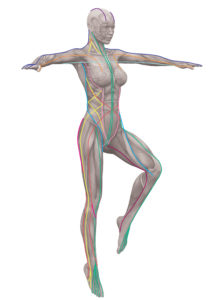
Myofascia is perhaps the most overlooked tissue in the human body — and at the same time one of the most important for metabolic health. It's a continuous, three-dimensional network of connective tissue that surrounds and runs through every muscle (epimysium, perimysium, endomysium), every muscle fibre, every organ, every nerve and every vessel. Think of it as an unbroken "communication network" that literally connects everything in the body — from the Achilles tendon to the base of the skull.
Until recently, fascia was seen as simple "wrapping" — a passive holding tissue with no particular function. Modern research, mainly by the groups of Robert Schleip (Ulm, Germany) and Helene Langevin (Harvard), has completely overturned this picture. Fascia is rich in fibroblasts — cells that aren't just structural but work as mechanical sensors and producers of signalling molecules. It also contains mechanoreceptors (Ruffini, Pacini), free nerve endings (nociceptive and proprioceptive), and myofibroblasts — cells that give fascia active contractile properties, independent of muscle contraction
5.2 The Link Between Myofascia and Myokines
Here lies the key that links fascia with all the myokine pathways we've discussed: fascial fibroblasts respond to mechanical tension (mechanotransduction) by releasing cytokines and growth factors. When fascia is stretched, compressed or loaded during exercise, the fibroblasts release IL-6 into the local microenvironment, contributing to the overall anti-inflammatory wave. They also release TGF-β, the central regulator of collagen synthesis and of remodelling the extracellular matrix.
Η Ντεκορίνη (Decorin), που αναφέρθηκε ως μυοκίνη με αντι-μυοστατινική δράση, είναι στην πραγματικότητα κατεξοχήν πρωτεογλυκάνη του περιτονιακού εξωκυττάριου χώρου. Η παραγωγή της ρυθμίζεται άμεσα από τη μηχανική φόρτιση της περιτονίας: εκκεντρικές κινήσεις, παρατεταμένη τάση και δυναμικό stretching αυξάνουν σημαντικά τη Ντεκορίνη στο περιτονιακό μικροπεριβάλλον, η οποία στη συνέχεια δεσμεύει τόσο τη Μυοστατίνη (επιτρέποντας μυϊκή ανάπτυξη) όσο και τον TGF-β (αποτρέποντας ίνωση και συγκολλήσεις). Αυτός ο μηχανισμός εξηγεί γιατί η υγιής περιτονία είναι απαραίτητη προϋπόθεση για τη μυϊκή υπερτροφία και γιατί ο περιτονιακός περιορισμός ή η ασυμμετρία (συγκολλήσεις, ίνωση) μπορεί να “μπλοκάρει” τα αναβολικά οφέλη της προπόνησης.
What's more, chronic inflammation of the fascia — seen in sedentary people, in metabolic syndrome and after injuries — creates a local build-up of TNF-α and IL-1β in fascial tissue, which feeds whole-body metabolic inflammation and may contribute to ongoing aches. Targeted exercise may help counter this through mechanical regulation of the fibroblasts.
5.3 Which Exercises Target the Fascia
Fascia responds to mechanical stimuli differently from those that target muscle tissue, which makes this knowledge valuable for any personal trainer in Palaio Faliro, Nea Smyrni, Alimos or Agios Dimitrios who wants to design holistic programmes. The four main categories of exercise that target the myofascia are:
- Pilates may be the ideal method of fascial training, thanks to its combination of slow eccentric movements, sustained isometric tension, full range of motion (full ROM) and controlled breathing. Pilates' controlled movements load the myofascial meridians through movement chains, activating fibroblasts across the whole network. Schleip's research shows that sustained mechanical tension (sustained loading) for 60–90 seconds increases type I collagen synthesis and decorin in fascial tissue by 30–50%.
- Slow eccentric movements (eccentric loading), such as slow lowering in the squat, Nordic hamstring curls or tempo deadlifts, load the fascia along the muscle–tendon chain, promoting connective tissue remodelling. The eccentric phase creates the greatest mechanical tension in fascial tissue, activating the fibroblasts more strongly. This mechanism explains why strength training with an eccentric emphasis is an excellent way to activate myokines and remodel fascia at the same time.
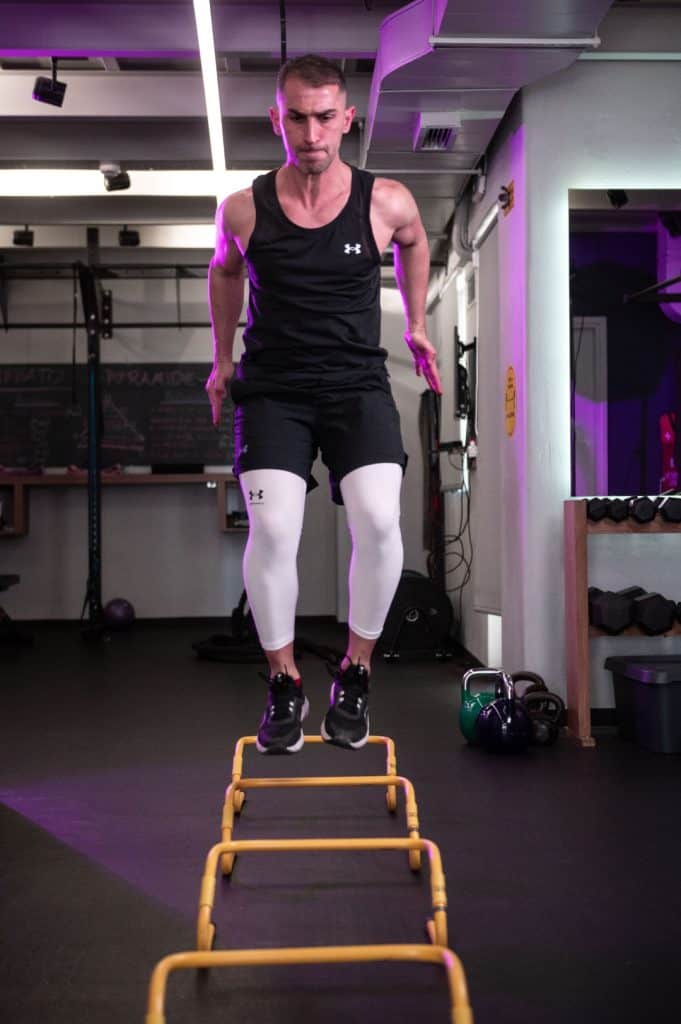
- Plyometric exercises (plyometrics) — jumps, bounds, hops — make use of fascia's unique ability to store and release elastic energy, like a "spring". During a plyometric movement, the fascia is loaded quickly in the eccentric storage phase and releases energy in the concentric phase. This stimulus increases the structural integrity of collagen and improves force transfer through the myofascial chains.
- Finally, loaded stretching — movements that combine stretching with a light weight or resistance, such as overhead stretches with a band or Jefferson curls — stimulates the fascia's Ruffini mechanoreceptors, lowering muscle tone through parasympathetic activation. This may help lower local inflammation, improves micro-circulation in fascial tissue and creates the best environment for myokines to act.
Putting it into practice in personal training: Including 10–15 minutes of targeted fascial work (slow eccentrics, dynamic stretching, Pilates flows) at the start or end of each session activates the fibroblasts, increases decorin, reduces fascial adhesions and creates the ideal environment for myokine signalling.
6. Anabolic Profile and Hormonal Signalling
Creating an anabolic environment doesn't depend only on testosterone or growth hormone levels, but also on the relationship between anabolic myokines, catabolic signals and stress hormones. Understanding this interaction is key to getting the most out of training.
6.1 Anabolic Myokines
IL-15 is the most important anabolic myokine. It acts by activating the JAK/STAT and Akt/mTOR pathways, increasing muscle protein synthesis while reducing protein breakdown by suppressing the ubiquitin–proteasome system. Strength training produces the highest IL-15 levels, followed by HIIT. At the same time, suppressing myostatin (which is strongest with strength training) releases the "brake" on muscle hypertrophy, letting mTOR work unhindered.
6.2 Cortisol: Two Sides of the Coin
Η κορτιζόλη, η κύρια ορμόνη στρες, έχει σύνθετη σχέση με την άσκηση. Το HIIT αυξάνει οξεία τα επίπεδα κορτιζόλης κατά 40-60%, αλλά αυτή η αύξηση είναι παροδική και ακολουθείται από ταχεία ανάκαμψη. Η χρόνια προσαρμογή στο HIIT οδηγεί σε μείωση της βασικής κορτιζόλης κατά 15-20%, βελτιώνοντας τον λόγο τεστοστερόνης/κορτιζόλης (T/C ratio), έναν κλασικό δείκτη αναβολικού προφίλ.
- Strength training also raises cortisol in the short term, especially in high-volume sessions (many sets, short rests). However, the simultaneous rise in testosterone and growth hormone balances this out, keeping a positive anabolic balance. Strategic periodisation, alternating heavy and light micro-cycles, optimises this balance.
- Pilates has a unique advantage: thanks to its lower metabolic intensity and its focus on controlled breathing and the mind–body connection, the rise in cortisol is minimal (10–15%). Studies in women with chronic stress found that 8 weeks of Pilates lowered baseline cortisol by 25%, while also improving sleep and body composition. This makes Pilates an ideal complement to intense training programmes.
7. The Antioxidant System, Glutathione and Myokines
The relationship between myokines and antioxidant defence is one of the most fascinating chapters of modern exercise physiology. During muscle contraction, increased mitochondrial activity inevitably produces reactive oxygen species (ROS). Although ROS cause oxidative damage in excessive amounts, at moderate levels they work as crucial signalling molecules that switch on the body's own antioxidant systems through hormesis. This mechanism explains how exercise, despite producing ROS in the short term, strengthens the body's antioxidant capacity in the long term.
7.1 Glutathione: The Central Antioxidant Regulator
Glutathione (GSH) is the most abundant antioxidant molecule inside cells and the central regulator of redox balance (redox homeostasis). It's a tripeptide (γ-glutamyl-cysteine-glycine) that circulates in reduced (GSH) and oxidised (GSSG) form. The GSH/GSSG ratio is the most reliable biomarker of oxidative stress at cell level. During a single exercise session, glutathione is used up quickly to neutralise ROS, temporarily lowering the GSH/GSSG ratio. However, long-term training stimulates the synthesis of new glutathione by activating the enzyme glutamate–cysteine ligase (GCL), with studies reporting 20–40% higher baseline GSH stores.
7.2 The Role of Nrf2 and the Link with Myokines
The central mechanism by which exercise strengthens the antioxidant system is the activation of the transcription factor Nrf2 (Nuclear factor erythroid 2-related factor 2). Nrf2, known as the "master regulator" of the antioxidant response, is activated both by ROS and by myokines. Specifically, irisin directly activates Nrf2 in muscle cells and liver cells through phosphorylation of the AMPK kinase. Nrf2 then moves into the nucleus and binds to the antioxidant response elements (ARE), triggering the expression of key enzymes, including glutathione-S-transferase (GST), glutathione peroxidase (GPx), superoxide dismutase (SOD) and catalase.
IL-6, when released as a myokine during exercise, also boosts Nrf2 signalling in the liver, improving whole-body antioxidant capacity. This boost in the liver is crucial, as the liver is the main producer and exporter of glutathione to the rest of the body. IL-15 contributes further by increasing mitochondrial biogenesis, which improves the cell's ability to handle ROS through mitochondrial glutathione (mGSH).
7.3 Antioxidant Response by Type of Exercise
HIIT causes the strongest short-term ROS production because of the repeated switching between high and low intensity, creating cycles of reduced and restored blood flow in muscle tissue. Paradoxically, this strong oxidative stress stimulus is the most effective activator of Nrf2. Studies report that after 8–12 weeks of HIIT, baseline GSH levels were 25–35% higher, while SOD and GPx enzyme activity rose by 20–30%. This translates into lower levels of malondialdehyde (MDA) and isoprostanes, two reliable markers of lipid peroxidation.
Strength training activates the antioxidant system through a different mechanism: the mechanical tension and micro-damage to muscle fibres during eccentric contraction produce ROS locally, activating Nrf2 in a tissue-specific way. Long-term strength training has been linked with 15–25% higher GSH levels in muscle and particularly boosts the activity of glutathione peroxidase (GPx), which protects cell membranes from lipid peroxidation. The simultaneous rise in decorin helps lower TGF-β, which at high levels suppresses the expression of antioxidant enzymes.
Το Pilates, αν και παράγει χαμηλότερα επίπεδα ROS, ασκεί σημαντική αντιοξειδωτική δράση μέσω δύο έμμεσων μηχανισμών. Πρώτον, η μείωση της κορτιζόλης που επιτυγχάνεται μέσω Pilates είναι κρίσιμη, καθώς η χρόνια υπερκορτιζολαιμία καταστέλλει τη σύνθεση γλουταθειόνης και μειώνει τη δραστικότητα του Nrf2. Η ανάκαμψη φυσιολογικών επιπέδων κορτιζόλης “απελευθερώνει” το αντιοξειδωτικό σύστημα. Δεύτερον, η βαθιά διαφραγματική αναπνοή του Pilates βελτιώνει την οξυγόνωση των ιστών και μειώνει τη χρόνια υποξία του λιπώδους ιστού, η οποία αποτελεί σημαντική πηγή συστημικού οξειδωτικού στρες σε άτομα με μεταβολικό σύνδρομο.
Κλινική εφαρμογή: Ο συνδυασμός HIIT (ισχυρή ενεργοποίηση Nrf2/GSH) + Strength Training (τοπική αντιοξειδωτική προσαρμογή) + Pilates (μείωση κορτιζόλης και ανάκαμψη redox balance) δημιουργεί τη βέλτιστη αντιοξειδωτική θωράκιση.
8. Strategic Combination: The Best Approach for Personalised Training
No single type of exercise maximises all the myokine benefits at once. That's exactly what makes the role of a specialist personal trainer so valuable: an evidence-based approach calls for a strategic combination (concurrent training) that makes use of the complementary myokine responses of each method. A personalised personal training programme in the southern suburbs — using gyms and training spaces in Palaio Faliro, Nea Smyrni, Alimos and Agios Dimitrios — could include 2 strength training sessions for maximum IL-15 and decorin production and myostatin suppression, 1–2 HIIT sessions for peak irisin, BDNF and FGF-21, 1–2 aerobic sessions on the treadmill, bike or cross-trainer for mitochondrial biogenesis, gradual anti-inflammatory IL-6, better fat oxidation and sleep regulation, and 1 Pilates session for cortisol regulation, a stronger night-time melatonin release, fascial remodelling and continued IL-15 production without extra metabolic stress.
Η σειρά εκτέλεσης και η ώρα της ημέρας έχουν σημασία που συχνά υποτιμάται: η εκτέλεση Strength Training πριν από HIIT στην ίδια συνεδρία μεγιστοποιεί τη μηχανική φόρτιση ενώ εκμεταλλεύεται τη μεταγενέστερη μεταβολική ενεργοποίηση. Η ένταξη Pilates σε απογευματινές ώρες ή ημέρες ανάκαμψης μειώνει τη συσσωρευμένη κορτιζόλη, βελτιώνει τον κιρκάδιο ρυθμό κορτιζόλης-μελατονίνης, και ενισχύει τα αντιοξειδωτικά αποθέματα γλουταθειόνης χωρίς να παρεμβαίνει στην πρωτεϊνοσύνθεση. Αυτές οι λεπτές αλλά κρίσιμες αποφάσεις αποτελούν τον πυρήνα του σύγχρονου, τεκμηριωμένου personal training.
9. Conclusions: The Right Intensity as the Key to Hormonal Bioactivity, Prevention and Quality of Life
Myokines are emerging as the central mechanism through which physical activity delivers its benefits for metabolic health. IL-6, irisin, IL-15, BDNF, decorin and FGF-21 form a signalling network that at the same time lowers inflammation, reshapes the cellular microenvironment, strengthens the antioxidant system through Nrf2 activation and higher glutathione, creates an anabolic profile, regulates the cortisol–melatonin axis and improves sleep. However, the most important finding concerns the relationship between exercise intensity and hormonal bioactivity — a topic that deserves a closer look.
9.1 The Right Intensity Raises Anabolic Hormones
Personalised exercise intensity — matched to each person's abilities, age and metabolic state — triggers a cascade of hormonal responses that changes the body's biochemistry. Testosterone rises significantly after moderate-to-high-intensity strength training (65–85% 1RM), with studies recording a short-term rise of 15–30% in men and a smaller but meaningful rise in women. Growth hormone (GH) shows an even more striking response: HIIT and strength training with short rests (60–90 seconds) can raise GH by 300–500% above baseline. Even oestrogens, often overlooked when people talk about exercise, are positively regulated: moderate exercise improves the oestradiol/oestrone ratio and favours oestrogen metabolism towards protective metabolites (2-hydroxyoestrone), which studies have linked with a lower risk of hormone-dependent cancers.
9.2 The Link with Glucose, Lipids and Hormonal Bioactivity
Εδώ βρίσκεται ένα από τα πιο σημαντικά και λιγότερο γνωστά σημεία: οι ορμόνες δεν δρουν στο κενό — η βιοδραστικότητά τους εξαρτάται άμεσα από το μεταβολικό περιβάλλον γλυκόζης και λιπιδίων. Η υπεργλυκαιμία (χρονικά υψηλή γλυκόζη αίματος) αυξάνει τη γλυκοζυλίωση της SHBG (σφαιρίνη δέσμευσης ορμονών φύλου), μεταβάλλοντας τη συγγένειά της για τις στεροειδείς ορμόνες και μειώνοντας τη διαθέσιμη ελεύθερη τεστοστερόνη και οιστραδιόλη. Η σωστή ένταση άσκησης βελτιώνει δραματικά την ευαισθησία στην ινσουλίνη (μέσω FGF-21, AMPK και Ιρισίνης), και μπορεί να βοηθήσει στη ρύθμιση της γλυκόζης νηστείας, σε συνεννόηση με τον γιατρό σου, υποστηρίζοντας έτσι τη φυσιολογική δράση της SHBG, ελευθερώνοντας τις ορμόνες να δράσουν στους ιστούς-στόχους.
At the same time, the improvement in blood lipids achieved through exercise — studies report HDL up by 5–15%, triglycerides down by 15–30% and lower oxidised LDL — has a direct effect on hormone production. Cholesterol is the parent molecule for the synthesis of all steroid hormones (testosterone, oestrogens, cortisol, DHEA). A healthier lipid profile ensures enough raw material for hormone production, while fewer oxidised lipids protect hormone receptors from oxidative damage, improving signalling at cell level. This self-reinforcing cycle — better glucose, better lipids, more active hormones — explains why regular, well-dosed exercise can have such a deep effect on quality of life.
9.3 Intensity as Medicine: Quality of Life and Prevention
Τα πρακτικά αποτελέσματα αυτής της ορμονικής και μεταβολικής βελτιστοποίησης μέσω εξατομικευμένης άσκησης μεταφράζονται σε μετρήσιμη βελτίωση της ποιότητας ζωής: αυξημένη ενέργεια και ζωτικότητα κατά τη διάρκεια της ημέρας χάρη στη βελτιωμένη ευαισθησία ινσουλίνης και τη σταθεροποίηση της γλυκόζης, βαθύτερος και ύπνος ανάκαμψης μέσω ρύθμισης του άξονα κορτιζόλης-μελατονίνης, βελτιωμένη σεξουαλική υγεία και libido χάρη στα αυξημένα επίπεδα βιοδραστικής τεστοστερόνης και οιστραδιόλης, ενισχυμένη γνωστική λειτουργία και διάθεση μέσω του BDNF και της μειωμένης νευροφλεγμονής, καθώς και ισχυρότερη ανοσολογική απόκριση λόγω μείωσης της χρόνιας φλεγμονής και ενίσχυσης της γλουταθειόνης.
Από προληπτική σκοπιά, η σωστή ένταση άσκησης μειώνει αποδεδειγμένα τον κίνδυνο διαβήτη τύπου 2 κατά 30-50%, καρδιαγγειακής νόσου κατά 20-40%, ορμονοεξαρτώμενων καρκίνων (μαστού, προστάτη, ενδομητρίου) κατά 15-30%, νευροεκφυλιστικών νοσημάτων (Alzheimer, Parkinson) κατά 20-35%, και οστεοπόρωσης κατά 25-40%. Αυτά τα ποσοστά δεν είναι θεωρητικά — προέρχονται από μεγάλες επιδημιολογικές μελέτες και τεκμηριώνουν ότι η εξατομικευμένη άσκηση αποτελεί ίσως τη μοναδική παρέμβαση που δρα ταυτόχρονα σε τόσα πολλά συστήματα πρόληψης.
9.4 The Other Side: What Happens with Too Much or Too Little Intensity
Στον αντίποδα της βέλτιστης έντασης βρίσκονται δύο εξίσου επικίνδυνες καταστάσεις: η υπερπροπόνηση (overtraining) και η ανεπαρκής ένταση. Η υπερβολική ένταση ή ο υπερβολικός όγκος προπόνησης χωρίς επαρκή ανάκαμψη οδηγεί σε σύνδρομο υπερπροπόνησης (OTS — Overtraining Syndrome), μια κατάσταση με σοβαρές μεταβολικές και ορμονικές συνέπειες. Η χρόνια κορτιζόλη εκτοξεύεται και παραμένει σταθερά αυξημένη, καταστέλλοντας τη βασική τεστοστερόνη κατά 20-40% και μειώνοντας δραματικά τον λόγο T/C (τεστοστερόνη/κορτιζόλη), τον πιο αξιόπιστο δείκτη αναβολικού ισοζυγίου. Η αυξητική ορμόνη μειώνεται παράδοξα, καθώς η υπερδιέγερση του υποθαλαμο-υποφυσιακού άξονα οδηγεί σε εξάντληση και δυσρύθμιση των παλμικών εκκρίσεων GH.
Σε επίπεδο μυοκινών, η υπερπροπόνηση αντιστρέφει τα οφέλη: η χρόνια υπερέκκριση IL-6 χάνει τον αντιφλεγμονικό χαρακτήρα της και αρχίζει να μοιάζει με τη χρόνια φλεγμονική IL-6, συνοδευόμενη από αύξηση TNF-α και CRP. Η Ιρισίνη μειώνεται λόγω εξάντλησης του PGC-1α, η γλουταθειόνη καταρρέει καθώς η παραγωγή ROS ξεπερνά μακροπρόθεσμα την ικανότητα αναγέννησής της, και ο λόγος GSH/GSSG πέφτει σε παθολογικά επίπεδα. Ο κιρκάδιος ρυθμός κορτιζόλης-μελατονίνης διαταράσσεται σοβαρά: η αυξημένη νυχτερινή κορτιζόλη αναστέλλει τη μελατονίνη, οδηγώντας σε αϋπνία, κακή ανάκαμψη και φαύλο κύκλο καταβολισμού. Επιπλέον, η ινσουλινοαντίσταση επιδεινώνεται, τα τριγλυκερίδια αυξάνονται, και η SHBG μεταβάλλεται, μειώνοντας τη βιοδραστικότητα των ορμονών φύλου. Κλινικά, η υπερπροπόνηση εκδηλώνεται με χρόνια κόπωση, μειωμένη libido, υποτροπιάζουσες λοιμώξεις, απώλεια μυϊκής μάζας παρά τη συνεχή προπόνηση, και διαταραχές διάθεσης.
On the other hand, very low intensity — the "walk without breaking a sweat" — although better than complete inactivity, fails to activate the crucial myokine and hormonal pathways. IL-6 rises only slightly (less than 2–3 times baseline), not enough to trigger the IL-10/IL-1ra anti-inflammatory cascade. Irisin stays at baseline, with no browning effect on fat tissue. Testosterone and growth hormone show no significant response, myostatin isn't suppressed and decorin doesn't rise — leaving minimal stimulus for keeping or building muscle. Nrf2 isn't activated enough, glutathione doesn't rise, and the mitochondria get no signal for biogenesis. In essence, very low intensity leaves the metabolic, hormonal and antioxidant systems described in this article unprotected.
Ο κανόνας-κλειδί: Η ένταση πρέπει να είναι αρκετά υψηλή ώστε να ενεργοποιεί τα μυοκινικά και ορμονικά μονοπάτια, αλλά αρκετά ελεγχόμενη ώστε να επιτρέπει πλήρη ανάκαμψη. Αυτή η “χρυσή τομή” είναι διαφορετική για κάθε άνθρωπο — και ο προσδιορισμός της αποτελεί τον πυρήνα του επιστημονικά τεκμηριωμένου personal training, είτε στο Παλαιό Φάληρο, τη Νέα Σμύρνη, τον Άλιμο ή τον Άγιο Δημήτριο.
9.5 Putting It into Practice: Maria's Case — A Complete Programme
To make the practical application of everything discussed in this article clear, let's look at a realistic example that represents thousands of people in the southern suburbs and in every city. Maria is 42, works in an office 9 hours a day, has two children and lives in Nea Smyrni. Over the last few years she has noticed a gradual decline she can't explain: constant tiredness despite 7 hours' sleep (which is restless and light), gradual weight gain, mainly around the tummy (+8 kg in 4 years), stiffness and aches in the neck and lower back, frequent colds (4–5 a year), lower libido, "brain fog" and difficulty concentrating, and a general feeling that she's "ageing too early".
Her blood tests show a classic metabolic imbalance: fasting glucose 108 mg/dL (borderline high), HbA1c 5.8% (pre-diabetes range), triglycerides 185 mg/dL (raised), HDL 42 mg/dL (low), CRP 3.2 mg/L (chronic low-grade inflammation), morning cortisol at the top of the normal range (22 μg/dL), free testosterone low-normal, and vitamin D 18 ng/mL (insufficient). Maria isn't "ill" in the usual sense — she's in the grey zone between health and illness that often goes unnoticed. Her doctor remains her first point of contact for these results.
Translated into the language of myokines, Maria's profile shows all of these at once: chronic metabolic inflammation (raised CRP → need for anti-inflammatory IL-6 and lower TNF-α), insulin resistance and unfavourable blood lipids (need for FGF-21, irisin, AMPK activation), reduced muscle mass from a sedentary life (possibly raised myostatin → need for IL-15, decorin), a disrupted circadian rhythm (high baseline cortisol → lower melatonin → poor sleep), lower antioxidant stores (need to activate Nrf2 and raise glutathione), fascial adhesions and stiffness (need to load the fascia and raise decorin), and lower hormonal bioactivity due to unfavourable lipids and increased SHBG glycation.
The Programme: 12 Weeks of Myokine-Focused Training
Based on all the myokine, hormonal and metabolic pathways discussed, a trained personal trainer would design the following weekly programme, tailored to Maria's needs, time and abilities – with her doctor's go-ahead.
- On Monday (morning, 7:00–8:00), Maria does full-body strength training at the gym, focusing on compound exercises (squat, deadlift, rows, push-ups) with moderate loads (60–70% 1RM) and a 3–4-second eccentric tempo to activate myokines and fascia at the same time. This session aims for maximum production of IL-15 (anabolic/fat-burning), decorin (anti-myostatin + fascial remodelling), myostatin suppression, and a short-term rise in testosterone and growth hormone. The morning slot makes use of the natural cortisol peak.
- On Tuesday (afternoon, 17:30–18:15), she does aerobic exercise on a gym machine: 40 minutes on the cross-trainer or bike in Zone 2 (60–70% HRmax, about 115–125 bpm for Maria). This session aims for mitochondrial biogenesis through PGC-1α, gradual anti-inflammatory IL-6, better fat oxidation, FGF-21 for liver insulin sensitivity, and better sleep quality through thermoregulation and parasympathetic activation. The afternoon slot helps cortisol fall towards the evening.
- Την Τετάρτη (απόγευμα, 18:00-19:00), η Μαρία παρακολουθεί συνεδρία Pilates mat ή reformer. Αυτή η συνεδρία στοχεύει τη ρύθμιση κορτιζόλης μέσω ελεγχόμενης αναπνοής (χωρίς εγγυημένο ποσοστό ή χρονοδιάγραμμα), τη φόρτιση μυοπεριτονίας μέσω αργών εκκεντρικών και πλήρους εύρους κίνησης, την παραγωγή Ντεκορίνης στον περιτονιακό ιστό, τη βελτίωση ιδιοδεκτικότητας και σταθερότητας core, και τη μείωση αυχενικού και οσφυϊκού πόνου μέσω αναδιαμόρφωσης fascia. Η βραδινή ώρα ευνοεί τη μετάβαση προς τη νυχτερινή μελατονίνη.
- On Thursday (morning, 7:00–7:40), she does HIIT on the treadmill or bike: 25–30 minutes using 30″ maximum effort / 90″ rest, or 4×4 minutes Tabata-style. This session aims for maximum irisin release (fat browning, glucose regulation), BDNF (thinking and focus, less "brain fog"), a large anti-inflammatory IL-6 response (lower CRP), FGF-21 (insulin resistance) and strong Nrf2 activation through oxidative stress (more glutathione). The morning makes use of natural cortisol without disturbing night-time sleep.
- Το Σάββατο (πρωί, 9:00-10:00), η Μαρία εκτελεί Strength Training lower body + core με έμφαση στις μεγάλες μυϊκές ομάδες (γλουτιαίοι, τετρακέφαλοι, οπίσθιοι μηριαίοι) που παράγουν τη μεγαλύτερη ποσότητα μυοκινών λόγω μάζας. Ακολουθείται από 15-20 λεπτά ήπιας αερόβιας στο ελλειπτικό (Ζώνη 1-2) για ενεργητική ανάκαμψη και ενίσχυση λιπολυτικής μυοκινικής δράσης. Η Παρασκευή και η Κυριακή αφιερώνονται σε πλήρη ανάκαμψη ή ελαφρύ περπάτημα 30 λεπτών, επιτρέποντας στα αντιοξειδωτικά συστήματα να αναγεννηθούν και στα μυοκινικά σήματα να ολοκληρώσουν τη δράση τους.
📋 Maria's Weekly Programme — A Myokine-Focused Plan
| Day | Time | Type of exercise | Target myokines | Why this time |
| Monday | 7:00 am | 🏋️ Strength Full Body Tempo eccentrics 3–4″ | IL-15 +++ Decorin ++ | Myostatin ↓↓↓ Testosterone ↑ | GH ↑↑ | Uses morning cortisol, maximum anabolic response |
| Tuesday | 5:30 pm | 🚴 Aerobic Zone 2 Cross-trainer/Bike 40′ | IL-6 (gradual) ++ FGF-21 ++ | PGC-1α +++ Fat oxidation ↑↑ | Mitochondrial biogenesis, better sleep through thermoregulation |
| Wednesday | 6:00 pm | 🧘 Pilates Mat/Reformer Breathing + Core + Full ROM | Cortisol ↓↓ Decorin (fascia) ++ IL-15 + | Melatonin ↑ | Lower cortisol, fascial remodelling, deeper sleep |
| Thursday | 7:00 am | ⚡ HIIT Treadmill 30″ max / 90″ rest × 8–10 | Irisin +++ | BDNF +++ IL-6 (large) +++ | FGF-21 ++ Nrf2 → GSH ↑↑ | Maximum fat browning, clearer thinking, more glutathione |
| Friday | — | 🚶 Ανάκαμψη Ελαφρύ περπάτημα 30′ | GSH regeneration Myokine signalling ➜ | Antioxidants regenerate, myokines complete their work |
| Saturday | 9:00 am | 🏋️ Strength Lower Body + 15′ easy aerobic work (Z1) | IL-15 +++ (large muscles) Testosterone ↑↑ | GH ↑↑↑ Myostatin ↓↓↓ | Large muscle groups = maximum myokine production |
| Sunday | — | 🛌 Full Rest Or gentle stretching/yoga | Μελατονίνη ↑↑ Ανάκαμψη fascia | Full rest, deep sleep, circadian regulation |
Any improvement is usually gradual, and every person responds differently – the stages below describe what studies have reported, not a promise. In the first weeks, people often notice better sleep, less stiffness and more energy (cortisol–melatonin regulation, early fascial remodelling). Over the following weeks, changes may include less visceral fat and better fasting glucose and triglycerides (irisin, FGF-21, IL-15, more fat oxidation). Later on, studies report more muscle mass, lower CRP, better HDL, higher hormonal bioactivity and stronger glutathione stores. This doesn't require extreme programmes — it requires strategic planning by someone who understands the biochemistry of exercise, alongside your doctor's advice.
📋 Possible Changes Over Time (individual results vary)
| Stage | What may change | Myokine mechanism |
| Early stage | ✅ Deeper sleep ✅ Less stiffness ✅ More energy | Cortisol ↓ → Melatonin ↑ Decorin ↑ → Fascial remodelling PGC-1α ↑ → Mitochondria ↑ |
| Middle stage | ✅ Less belly fat ✅ Better fasting glucose ✅ Lower triglycerides | Irisin → Fat browning FGF-21 → Insulin sensitivity IL-15 → Visceral fat breakdown |
| Later stage | ✅ More muscle mass ✅ Lower CRP | HDL ↑ ✅ Hormonal bioactivity ↑ ✅ Stronger immune system | IL-15/Decorin → Μυοστατίνη ↓↓↓ IL-6 αντιφλεγμονική → CRP ↓ SHBG ανάκαμψη → Ελεύθ. ορμόνες ↑ Nrf2 → GSH ↑20-40% |
Important: Maria's programme is an example and doesn't replace a personal assessment. Every body is unique — age, medical history, fitness, available time and personal goals all need to be taken into account, and please consult your doctor first. Look for a specialist personal trainer in Palaio Faliro, Nea Smyrni, Alimos or Agios Dimitrios for your own assessment.
9.6 Final Message
Understanding these mechanisms — still largely unknown even to experienced exercise professionals — fundamentally changes how we see the role of personal training. It's no longer about designing "exercises", but about the personalised regulation of a whole biochemical system — myokines, hormones, glucose, lipids, antioxidants and circadian rhythms. The shift from the general advice "do some exercise" to the specialist idea of "exercise as medicine" is one of the most promising chapters of modern metabolic health, and the trained personal trainer is at the heart of this revolution.
Every muscle contraction is a molecular recipe. Personalised exercise (personal training) isn't a luxury — it's a way to put your muscles to work as the body's own anti-inflammatory, antioxidant and anabolic "medicine", to support the activity of your hormones, and to invest in years of good-quality life. If you're looking for a personal trainer in Palaio Faliro, Nea Smyrni, Alimos or Agios Dimitrios, look for someone who understands this science.
📋 Now You Know. What Will You Do with This Knowledge?
If you've read this far, you now understand more about the biochemistry of exercise than most people — and probably more than many fitness professionals. The table below shows the three paths open to you.
| 🟡 Option A | 🟢 Option B | 🟣 Option C |
| I Do Nothing The myokine pathways stay inactive. Metabolic inflammation continues. Myostatin dominates. Cortisol stays high. Glutathione falls. Likely outcome: Gradual decline. | I Start on My Own Some myokines are activated. The intensity may not be right. Risk of over- or under-training. No strategy for timing or type. Likely outcome: Partial improvement, trial & error. | Personalised Personal Training Each myokine is targeted precisely. Right intensity = right hormones. Right timing = circadian regulation. A strategic mix of HIIT + strength + aerobic work + Pilates. Likely outcome: A plan built around your body and goals. |
📩 START NOW: Free Initial Assessment 📩
Personal Training in Palaio Faliro • Nea Smyrni • Alimos • Agios Dimitrios
Send us a message or call +30 693 951 1462 and we'll design your own myokine-focused plan together.
References
- Pedersen BK, Febbraio MA. Muscles, exercise and obesity: skeletal muscle as a secretory organ. Nat Rev Endocrinol. 2012;8(8):457-465.
- Steensberg A, et al. Production of interleukin-6 in contracting human skeletal muscles. J Physiol. 2000;529(1):237-242.
- Boström P, et al. A PGC1-α-dependent myokine that drives brown-fat-like development of white fat and thermogenesis. Nature. 2012;481(7382):463-468.
- Nielsen AR, et al. Expression of interleukin-15 in human skeletal muscle: effect of exercise and muscle fibre type composition. J Physiol. 2007;584(1):305-312.
- Kanzleiter T, et al. The myokine decorin is regulated by contraction and involved in muscle hypertrophy. Biochem Biophys Res Commun. 2014;450(2):1089-1094.
- Kim KH, et al. Autophagy deficiency leads to protection from obesity and insulin resistance by inducing Fgf21. Nat Commun. 2013;4:2819.
- Huh JY. The role of exercise-induced myokines in regulating metabolism. Arch Pharm Res. 2018;41(1):14-29.
- Powers SK, Jackson MJ. Exercise-induced oxidative stress: cellular mechanisms and impact on muscle force production. Physiol Rev. 2008;88(4):1243-1276.
- Done AJ, Traustadóttir T. Nrf2 mediates redox adaptations to exercise. Redox Biol. 2016;10:191-199.
- Radak Z, et al. Exercise, oxidative stress and hormesis. Ageing Res Rev. 2008;7(1):34-42.
- Lian D, et al. Irisin activates the Nrf2 signaling pathway to protect against oxidative stress. Free Radic Biol Med. 2022;183:66-75.
- Thirupathi A, et al. Effect of different exercise modalities on oxidative stress: a systematic review. Biomed Res Int. 2021;2021:1947928.
- Tortosa-Martínez J, et al. Exercise, melatonin and the circadian clock: exploring the relationship. J Sports Med Phys Fitness. 2020;60(7):1031-1038.
- Chennaoui M, et al. Sleep and exercise: a reciprocal issue? Sleep Med Rev. 2015;20:59-72.
- Hackney AC. Exercise as a stressor to the human neuroendocrine system. Medicina. 2006;42(10):788-797.
- Kraemer WJ, Ratamess NA. Hormonal responses and adaptations to resistance exercise and training. Sports Med. 2005;35(4):339-361.
- Vingren JL, et al. Testosterone physiology in resistance exercise and training. Sports Med. 2010;40(12):1037-1053.
- Meeusen R, et al. Prevention, diagnosis, and treatment of the overtraining syndrome: joint consensus statement of the ECSS and ACSM. Med Sci Sports Exerc. 2013;45(1):186-205.
- Cadegiani FA, Kater CE. Hormonal aspects of overtraining syndrome: a systematic review. BMC Sports Sci Med Rehabil. 2017;9:14.
- Hammond GL. Plasma steroid-binding proteins: primary gatekeepers of steroid hormone action. J Endocrinol. 2016;230(1):R13-R25.
- McTiernan A. Mechanisms linking physical activity with cancer. Nat Rev Cancer. 2008;8(3):205-211.
- Schleip R, et al. Fascia is able to actively contract and may thereby influence musculoskeletal dynamics. Med Hypotheses. 2005;65(2):273-277.
- Langevin HM, et al. Fibroblast cytoskeletal remodeling contributes to connective tissue tension. J Cell Physiol. 2011;226(5):1166-1175.
- Schleip R, Müller DG. Training principles for fascial connective tissues: scientific foundation and suggested practical applications. J Bodyw Mov Ther. 2013;17(1):103-115.
- Kjaer M, et al. Extracellular matrix adaptation of tendon and skeletal muscle to exercise. J Anat. 2006;208(4):445-450.
- Laursen PB, Jenkins DG. The scientific basis for high-intensity interval training. Sports Med. 2002;32(1):53-73.
- Holloszy JO. Biochemical adaptations in muscle: effects of exercise on mitochondrial oxygen uptake. J Biol Chem. 1967;242(9):2278-2282.
- Inoue DS, et al. Acute increases in exercise intensity modulate the release of myokines. Cytokine. 2022;149:155745.
- Kredlow MA, et al. The effects of physical activity on sleep: a meta-analytic review. J Behav Med. 2015;38(3):427-449.
Michalis Kalogerakis
Scientific Director & Manager
HealthFit Training Studio
Medical Laboratory Science graduate | Graduate of the Athens Academy of Physical Education
Specialism: Fitness & Health
Michalis Kalogerakis brings together two worlds that rarely meet: biomedical knowledge from his studies in Medical Laboratory Science, and hands-on experience of personalised exercise from the Athens Academy of Physical Education, where he specialised in Fitness & Health. This combination lets him understand the language of myokines, hormones and metabolic markers, and translate it into personalised training plans that aim for real change in how your body works — not just how it looks.
As Scientific Director and Manager of HealthFit Training Studio, Michalis designs programmes based on current scientific literature, building the principles of "exercise as medicine" into every personal training session. The HealthFit Training Studio philosophy rests on the belief that exercise isn't a one-size-fits-all prescription — it's a personalised biochemical stimulus, tailored to each person's metabolic profile, goals and life.
HealthFit Training Studio
Personalised, Science-Based Personal Training
Palaio Faliro • Nea Smyrni • Alimos • Agios Dimitrios
📩 Get in Touch for a Free Initial Assessment
© 2026 Michalis Kalogerakis / HealthFit Training Studio. All rights reserved.
This article is an original scientific review for information purposes. It does not replace medical advice. Please consult your doctor before starting any exercise programme.